
Portfolio · Machine learning · Biometrics · Red teaming
Biometric security for ML-powered consumer products released to more than a million people. We build it, and then we attack it.
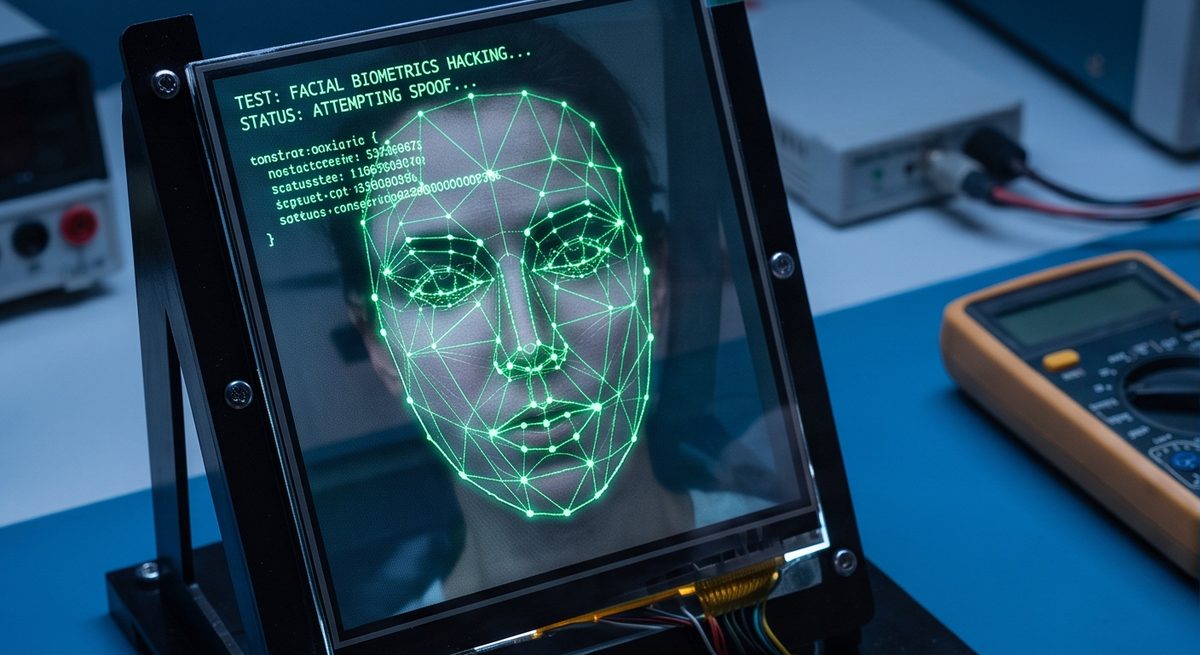
Camera-driven biometrics, facial recognition and fingerprint scanning, are only as trustworthy as their resistance to spoofing, and the threat landscape does not hold still. Our client needed both sides of that problem covered: rigorous validation of the biometric stack, and offensive testing that finds the failure modes attackers will find first.
We build and validate the biometric security for ML-powered products in production, and we run structured adversarial red teaming against the result: presentation attacks, spoof artifacts, and hard edge cases, exercised at consumer scale.
That work goes past the system and into the models. We assess anti-spoof and liveness models against emerging attack vectors rather than only against a fixed corpus, including AI-generated faces and other synthetic artifacts that did not exist when the model was trained.
Every attack we develop is weighed by how accessible it actually is. A spoof an attacker can mount with a printed photo is a different risk from one that needs a fabrication lab, and defenses should be prioritized on that basis rather than on novelty. Findings feed back into the spoof defense mechanisms, so each cycle hardens the product instead of just producing a report.
Shipped in products used by more than a million consumers, with vulnerabilities found and fixed before launch instead of after.
Client engagements are confidential, so this work is described in general terms.
More work
Took a novel sensing technology from prototype to a shipping consumer product, including factory-line calibration and high-volume QA.
Read the case study → Electrical · Mechanical · SoftwareCamera and sensor integration, real-world data collection, and reliability testing for a platform deployed at consumer scale.
Read the case study →Get in touch
Book a call, or send us a message below.
Schedule a call